


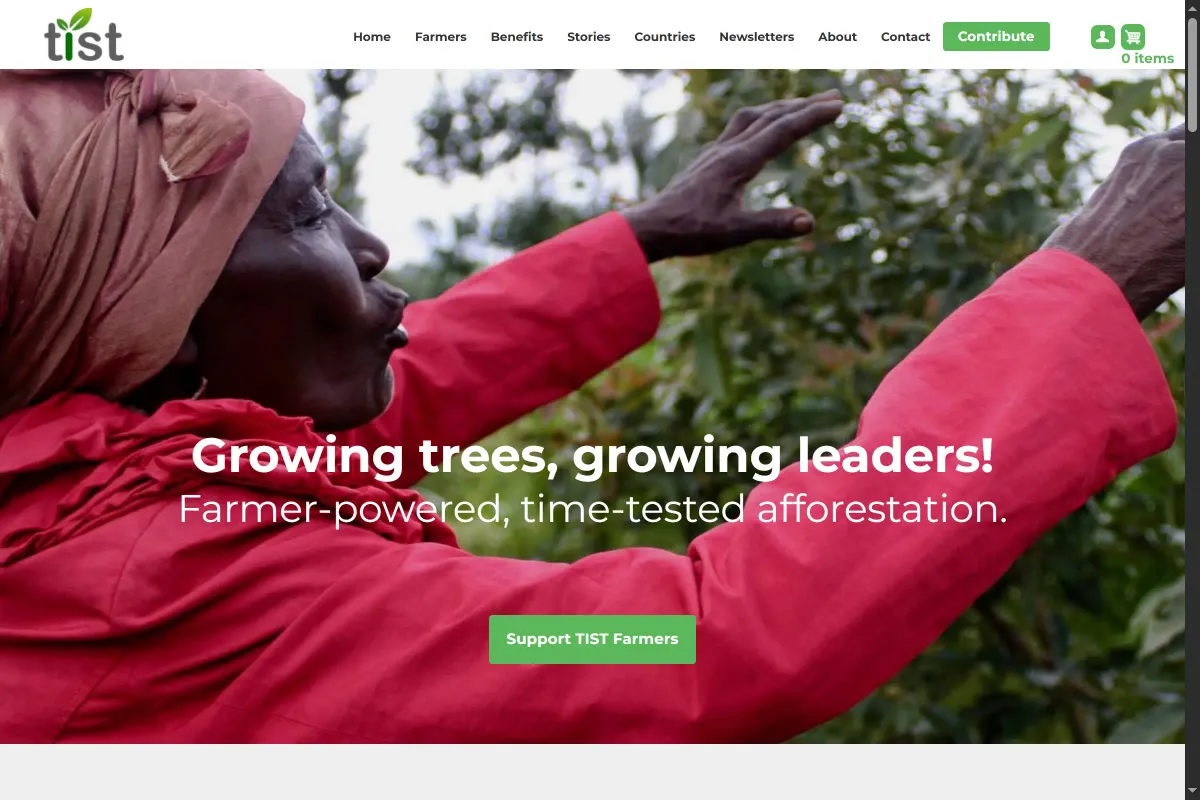
TIST brings subsistence farmers together in small groups to plant trees on their lands, blending reforestation with income-boosting agriculture. Operating in Kenya, Tanzania, Uganda, and India, this program equips locals with skills to restore environments while earning from carbon credits.
Its strength lies in grassroots ownership—farmers decide what to plant, gaining tools for sustainable farming along the way.
Highlights of TIST's Approach
-
Farmer-organized groups planting millions of trees on their own land
-
Training in conservation farming and agroforestry
-
Long-term monitoring for high survival rates
-
Direct carbon credit revenue shared with participants
-
Focus on multiple benefits like food security and soil health
Pros and Cons of TIST
Pros
-
Builds genuine ownership and leadership among farmers
-
Combines climate action with poverty reduction
-
Proven over decades with massive scale
-
Transparent payments straight to communities
Cons
-
Primarily active in specific rural regions
-
Progress tied to long-term farmer commitment
-
Less flashy dashboards for casual donors
Why TIST Feels Different – A Quick Wrap-Up
TIST stands tall by prioritizing farmer-led innovation, where trees become tools for poverty reduction—not just CO2 sinks. Unlike top-down campaigns, it fosters self-reliance, turning participants into leaders who expand the model organically.
Alternatives: Eden Reforestation Projects for employ-to-plant, or Vi Agroforestry for East Africa focus.
Final Take: Trees That Transform Lives
TIST shows reforestation thrives when locals drive it, creating resilient farms and forests that endure.


